
When it comes to crushing materials, primary crushers often steal the spotlight. However, secondary impact crushers have gained recognition for their crucial role in the aggregate and mining industries. These crushers offer a versatile and efficient solution for reducing the size of different types of materials. In this article, we will explore the features and benefits of secondary impact crushers and how they are transforming crushing operations.
A secondary impact crusher is a machine designed to handle medium-hard to hard and abrasive materials. Unlike primary crushers that break down large rocks into smaller pieces, secondary crushers further reduce the size of these materials. This makes them ideal for processing diverse materials like limestone, dolomite, sandstone, gravel, basalt, and granite.
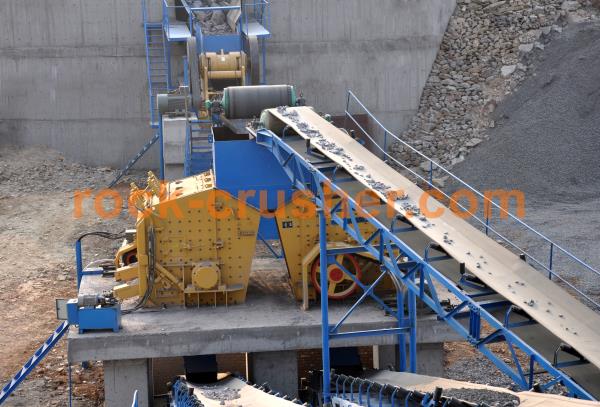
One of the primary advantages of secondary impact crushers is their ability to produce a high-quality cubic-shaped end product. The design of the crusher's rotor and chamber allows for optimum crushing performance, resulting in consistent particle size distribution. This is especially important when producing concrete and asphalt aggregates, as well as for the production of manufactured sand. The cubical-shaped end product enhances the overall quality of the final product and improves its marketability.
Another significant feature of secondary impact crushers is their ability to handle a wide range of feed sizes. This flexibility makes them suitable for various applications, including secondary crushing in quarries, recycling operations, and construction sites. The adjustable curtains and impact aprons allow operators to fine-tune the machine's performance according to the specific material being processed. Moreover, secondary impact crushers can efficiently process materials with different hardness levels, thanks to their reversible blow bars. This enables the machine to adapt to changing feed requirements and maintain optimal productivity.
Secondary impact crushers are also known for their superior safety features. Most models are equipped with state-of-the-art technology and safety devices to protect operators and minimize downtime. These include rotor locking systems, hydraulic adjustment mechanisms, and automatic lubrication systems. Furthermore, modern designs are built for easy maintenance, with access doors and platforms that allow for quick inspections and part replacements.
Environmental concerns and sustainability have become significant factors in the crushing industry. Secondary impact crushers are designed with these factors in mind. Their efficient operation, reduced energy consumption, and low emission levels contribute to a greener and more sustainable crushing process. This aligns with the increasing demand for environmentally-friendly solutions in construction and mining activities.
To summarize, secondary impact crushers have emerged as a versatile and efficient crushing solution. Their ability to produce high-quality, cubical-shaped end products, handle various feed sizes, and incorporate advanced safety features make them indispensable in the aggregate and mining sectors. Investing in a secondary impact crusher can result in improved production rates, reduced maintenance costs, and enhanced overall efficiency.
If you are in the market for a secondary impact crusher, consider factors such as the required capacity, the hardness and abrasiveness of the materials, and the specific application. Consulting with industry professionals can help you select the right equipment for your needs. Remember, a well-designed secondary impact crusher is an investment that can have a significant impact on your crushing operations for years to come.