
In the world of mining and construction, the jaw crusher is widely used for primary crushing of hard materials. It is known for being a reliable and robust machine that is generally utilized in many industries, including quarrying, mining, construction, smelting, metallurgy, and more. This article delves into the definition and functionality of jaw crushers, shedding light on their key features, benefits, and applications.
Definition and Components
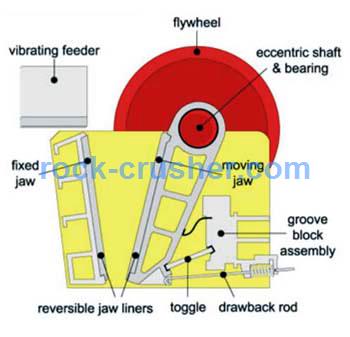
A jaw crusher is a compression-type crushing machine consisting of a fixed jaw and a movable jaw. It is designed to reduce large rocks into smaller rocks, gravel, sand, or rock dust. The stationary jaw is anchored in an immovable structure, while the swing jaw exerts force on the material by pushing it against the stationary plate.
Key Features and Mechanisms
1. Jaw Plates:
Jaw crushers feature two jaw plates, one fixed and the other movable. These plates are made from durable materials, such as high manganese steel, and have a concave surface that allows for efficient crushing of hard substances.
2. Toggle System:
The toggle system enhances the performance of a jaw crusher by facilitating a smooth crushing process. It comprises a toggle plate that connects the swing jaw to the eccentric shaft, allowing the jaw to move in a reciprocating motion.
3. Eccentric Shaft and Bearings:
The eccentric shaft, driven by a motor, rotates the moving jaw, causing the material to be crushed. It is supported by bearings, which help reduce friction and ensure the smooth operation of the machine.
4. Adjustable Discharge Setting:
The gap between the fixed jaw and the movable jaw determines the size of the crushed material. Users can adjust this gap according to their desired output size, making jaw crushers versatile for various applications.
5. Overload Protection:
Modern jaw crushers are equipped with safety mechanisms to prevent damage caused by excessive loads. These mechanisms automatically release or toggle out when an overload occurs, protecting the machine from potential harm.
Applications
1. Quarrying and Mining:
Jaw crushers are commonly used in quarry operations and mining sites to crush and process various types of rock and ore. They are particularly useful in extracting valuable minerals, such as gold, copper, and diamonds, as well as construction aggregates.
2. Construction and Demolition:
Jaw crushers play a crucial role in the recycling industry by reducing the size of concrete, asphalt, and other construction waste materials. This process allows for the reuse of these materials in new construction projects, reducing the environmental impact.
3. Metallurgy and Smelting:
In metallurgical processes, jaw crushers are employed to crush ores, coal, and other raw materials for further processing. They are an integral part of the overall ore processing flow, ensuring that the extracted materials are properly prepared for subsequent stages.
Jaw crushers are powerful and versatile machines designed to reduce large rocks into smaller particles for various applications. With their robust construction, adjustable discharge settings, and safety features, they are a reliable and efficient solution for primary crushing needs in industries such as mining, quarrying, construction, and more.
Understanding the definition and functionality of jaw crushers allows for a better appreciation of their importance and the various ways they contribute to different industries. By optimizing the crushing process, jaw crushers help enhance productivity, improve overall efficiency, and reduce operational costs in numerous operations.