
Jaw crushers are one of the most commonly used crushers in the mining and quarrying industry. They are known for their ability to crush tough materials, such as hard rocks, ores, and minerals, into smaller, more manageable sizes. However, to ensure optimal performance and longevity, it's essential to have a jaw crusher with a proper bearing design.
Bearing design refers to the type of bearing employed in the jaw crusher. Typically, there are two types of bearings used in a jaw crusher - the spherical roller bearing, and the tapered roller bearing. The choice of bearing design depends on several factors, including the load capacity of the crusher, the speed of rotation, and the operating temperature.
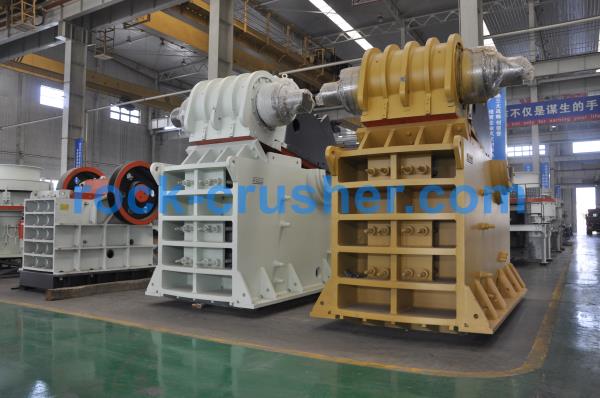
One of the most common bearing designs found in jaw crushers is the spherical roller bearing. These bearings can handle large radial and axial loads and are typically used in high-capacity jaw crushers. The spherical roller bearing comprises an inner ring with two raceways, an outer ring with one spherical raceway, and two rows of rollers. These rollers are held in place by cages and allow for compensation of misalignment and deflection.
The tapered roller bearing, on the other hand, is used primarily in smaller jaw crushers that have a lower capacity. The tapered roller bearing comprises an inner ring, an outer ring, and a set of rollers. These rollers are arranged in a cone shape that allows for the bearing to handle radial and axial loads in a specific direction. Tapered roller bearings are used primarily due to their ability to control shaft deflection, vibration, and misalignment.
The bearing design is critically important because it affects the overall performance and durability of the jaw crusher. A poorly designed bearing can lead to premature failure, increased wear and tear, and reduced efficiency. Therefore, it is essential to ensure that the bearing design is appropriate for the application.
In addition to the bearing design, there are several other factors to consider when selecting a jaw crusher, including the type of material being crushed, the size of the feed, the required output size, and the operating conditions. All these factors play a significant role in determining the right jaw crusher for the job.
In short, selecting the proper bearing design is essential for ensuring optimal performance and longevity of a jaw crusher. The choice between a spherical roller bearing and a tapered roller bearing depends on several factors, including the load capacity, speed of rotation, and operating temperature. By considering these factors, as well as the type of material being crushed and the operating conditions, one can select the ideal jaw crusher and bearing design for their specific application.