
The stone crusher industry plays a crucial role in the construction and infrastructure development sectors around the world. This transformative machinery is designed to crush stones into various sizes that are used for different purposes such as road construction, building foundations, and landscaping projects. In this article, we will delve into the working mechanism of a stone crusher to understand its essential components and the process involved.
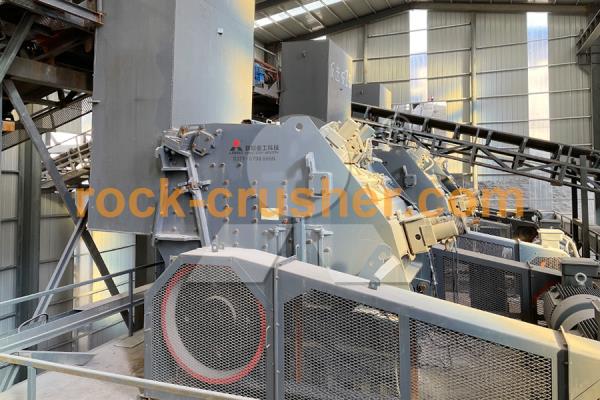
Understanding the Stone Crusher's Working Principle:
The primary purpose of a stone crusher is to break large rocks into smaller sizes for various applications. This process involves a combination of mechanical, electrical, and hydraulic machinery working synergistically to achieve the desired results.
1. Conveyor System:
The raw materials are initially transported to the stone crusher through a conveyor belt. The conveyor system ensures a continuous flow, allowing the crusher's operation to be well-managed and efficient.
2. Feeder:
In order to control the flow of materials, a feeder is equipped with the primary crusher. The feeder regulates the feed rate, ensuring that a constant supply of raw materials is maintained. This steady supply optimizes the crushing process and prevents unnecessary strain on the machinery.
3. Primary Crusher:
The primary crusher, commonly known as a jaw crusher, is responsible for breaking down the initial input material into smaller, manageable pieces. It uses a pair of vertically-oriented jaws, one fixed and the other moveable, to compress and crush the rocks against each other. This compression process creates smaller fragments that can be further processed.
4. Vibrating Screen:
To ensure the quality and uniformity of the crushed stones, a vibrating screen is used to separate them into different sizes. The screen consists of multiple layers of meshes that allow only particles of the desired size to pass through. This step is critical for applications that require specific stone sizes.
5. Cone or Impact Crushers:
Depending on the specific needs of the construction project, secondary crushers like cone or impact crushers may also be employed. These crushers further reduce the size of the fragments into a more refined and specific size range required for different construction applications.
6. Conveyor Belts:
After the stone has been crushed into the desired size, it needs to be transported for further processing or to the construction site. Conveyor belts are used to transfer the crushed stones from one location to another, ensuring smooth and efficient operations.
The working principle of a stone crusher involves a series of crushing stages, starting with the raw materials being fed into a conveyor belt that delivers them to the primary crusher. Subsequently, the stones are crushed using jaw crushers, cone crushers, or impact crushers, and then screened to obtain the desired size range. Finally, the crushed stones are transported via conveyor belts to either further processing facilities or directly to construction sites.
The stone crusher industry is an integral part of the mining and construction sectors, enabling the creation of vital infrastructure worldwide. Understanding the working mechanism behind this incredible piece of machinery provides us with a deeper appreciation for its role in modern society. It is their efficiency and reliability that enable the seamless production of crushed stones for essential construction projects.
As the demand for infrastructure development continues to rise, the stone crusher industry will continue to evolve, employing advanced technologies and innovative solutions to meet the growing needs of the modern world.