
The world of aggregate production and material processing relies heavily on crushers – powerful machines that reduce the size of rocks, minerals, and other materials. But with so many different types available, choosing the right crusher for your needs can be daunting. This blog post will break down the major categories of crusher machines, highlighting their strengths and weaknesses. Understanding these differences will help you make an informed decision for your specific application.
Crushers are broadly classified based on their crushing mechanism: compression, impact, or attrition. Within each category, further distinctions exist based on design and application. Let's delve into the main types:
1. Jaw Crushers: These are workhorses of the crushing industry, renowned for their robust construction and ability to handle large feed sizes. Jaw crushers use two jaws – a fixed and a moving jaw – that crush material by compression. The moving jaw swings in a reciprocating motion, trapping material between the jaws and progressively reducing its size. Jaw crushers are ideal for primary crushing, handling large rocks and boulders. Their simplicity and reliability make them a popular choice, although they can be less efficient than other types for finer crushing.
2. Cone Crushers: Cone crushers operate on a similar principle to jaw crushers, using compression to reduce material size. However, they utilize a rotating cone that crushes material between the cone and a concave mantle. Cone crushers are known for their high capacity and ability to produce a more consistent product size compared to jaw crushers. They are often used in secondary and tertiary crushing stages, producing finer aggregates. Different cone crusher designs exist, each optimized for specific applications and material properties.
3. Impact Crushers: Unlike compression crushers, impact crushers use the force of impact to break down material. Material is thrown against a rotor with hammers or other impact elements, shattering it into smaller pieces. Impact crushers are excellent for handling softer, more brittle materials and are capable of producing cubical-shaped aggregates. They're often preferred for recycling applications, handling materials like concrete and asphalt. However, they can be less efficient for very hard or abrasive materials.
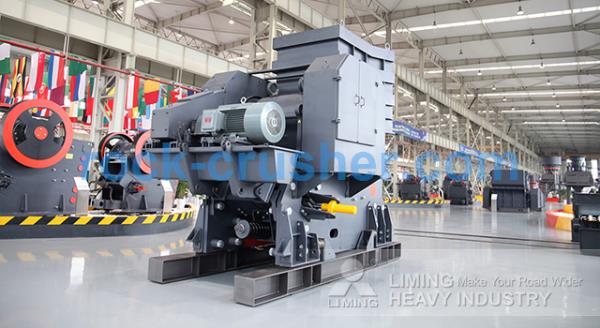
4. Roll Crushers: Roll crushers consist of two counter-rotating rollers that crush material by compression. The rollers can be smooth or grooved, influencing the final product size and shape. Roll crushers are efficient for crushing softer materials and are often used in secondary or tertiary crushing stages. They are known for producing a relatively uniform product size, but they are less suitable for handling large rocks or very hard materials.
5. Hammer Mills: These are high-speed impact crushers that use hammers to pulverize material. Hammer mills are typically used for fine crushing and pulverizing applications, generating a fine powder or granular material. They are frequently used in the mining and stone industries for processing a wide range of materials.
Choosing the Right Crusher:
Selecting the appropriate crusher depends on several factors:
* Material properties: Hardness, abrasiveness, and moisture content significantly influence crusher selection.
* Desired product size: The required size of the final product determines the type and configuration of the crusher.
* Capacity requirements: Throughput is a crucial consideration, dictating the size and type of crusher needed.
* Budget: Crushers vary significantly in cost, influencing the choice of technology.
This overview provides a basic understanding of the different types of crusher machines. For specific applications, consulting with industry experts is crucial to ensure the selection of the most efficient and cost-effective solution.