
When it comes to size reduction, the Roll Crusher has emerged as a reliable and efficient equipment choice for many industries. Its robust design, high throughput capacity, and ability to handle sticky materials make it an ideal choice for crushing tough and abrasive materials. In this article, we delve into the working principles of a roll crusher and explore how it effectively breaks down materials with efficiency.
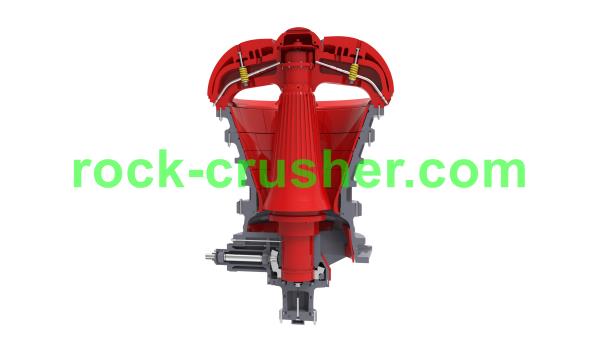
The Working Principle:
A roll crusher consists of a heavy-duty machine drum that revolves around a central axis, supported by a set of sturdy bearings. Its crushing mechanism is powered by a motor, driving the roller elements, or crushing rolls, in a symmetrical pattern imparting compressive force to the materials.
As the rolls rotate, materials are fed into the crushing chamber between the rolls, where they are initially compressed by the slow-speed rolling action. The primary crushing stage takes place as the material is pulled between the rolls by the friction force generated by the rotating rolls. Any large-sized particles are reduced to a manageable size during this process.
The material undergoes a secondary compression stage as it moves towards the crushing gap. In this phase, the rolls exert a higher pressure, applying a significant force to the material. The amount of pressure applied can be adjusted by changing the gap between the rolls, allowing for precise control over the final product size.
Efficient Handling of Sticky Materials:
One of the key advantages of a roll crusher is its ability to handle sticky materials. Due to the tendency of some materials to adhere to the crushing rolls, they can impose a significant challenge for other crushing equipment. However, the roll crusher utilizes its unique crushing mechanism to effectively process sticky materials.
The rolls are designed with a series of intermeshing teeth or claws that grip the material and prevent it from sliding away. This ensures that the material is continuously pulled into the crushing gap, enabling efficient size reduction. Moreover, the high surface area of the rolls helps to prevent material build-up, reducing the chances of plugging and enhancing the overall operational efficiency.
Applications and Benefits:
The roll crusher finds extensive usage in various industries that require size reduction of materials including mineral processing, metallurgy, cement, chemical, and other industries. Its versatility allows it to handle a wide range of materials, from soft to medium-hard rocks, ores, and even hard-to-break sticky materials.
The benefits of using a roll crusher include:
1. Improved Efficiency: The roll crusher offers a more efficient way to process materials compared to traditional crushers. Its ability to handle sticky materials and high reduction ratios result in consistently sized end products.
2. Cost-effective Operation: Roll crushers require less maintenance and lower operating costs compared to other crushing equipment. Their robust design ensures extended service life, reducing downtime and increasing productivity.
3. Versatility: Roll crushers can accommodate a variety of materials with different characteristics, making them suitable for various applications. Their ability to handle both fine and coarse materials provides flexibility in processing requirements.
To summarize, the working principle of a roll crusher involves compressive forces applied by the rotating rolls to break down materials. Its ability to efficiently handle sticky materials and provide precise control over the final product size makes it a valuable asset in numerous industries. The roll crusher's cost-effective operation and versatility offer significant advantages, ensuring optimal size reduction with improved efficiency.