
The crushing strength of rock is an important parameter that plays a crucial role in various engineering applications. It is defined as the maximum compressive stress that a rock sample can withstand before failure. The crushing strength of rock is influenced by various factors such as rock type, mineralogy, stone size, porosity, and loading rate. In this article, we will take a closer look at the crushing strength of rock and its significance in engineering.
Rock is a naturally occurring solid mass composed of one or more minerals. The properties of each rock type are unique and determine its suitability for various engineering applications. One important property of rock is its crushing strength. A rock’s crushing strength is typically expressed in terms of its compressive strength, which is measured in units of stress (MPa or psi).
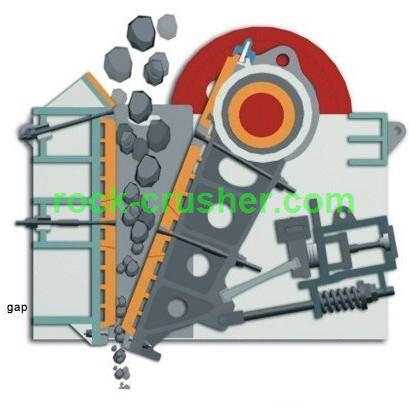
The compressive strength of rocks varies greatly depending on its type, mineralogy, stone size, and porosity. For example, granite, which is a coarse-grained igneous rock, has a higher compressive strength than limestone, which is a sedimentary rock composed mainly of calcium carbonate. Similarly, rocks with a high porosity, such as sandstone, have lower compressive strength than those with lower porosity, such as basalt.
The significance of the crushing strength of rock lies in its application in the design and construction of various engineering structures. For example, the crushing strength of rock is an important parameter in the design of foundations for dams, bridges, and buildings. The ability of the rock to withstand the weight of the structure without collapsing depends on the crushing strength of the rock.
The crushing strength of rock is also important in the construction industry, particularly in the manufacturing of concrete. Concrete is a composite material composed of cement, water, and aggregates, such as sand and gravel. The strength of concrete largely depends on the strength of the aggregates used. Therefore, selecting aggregates with high crushing strength is crucial in the manufacture of high-strength concrete.
In the mining industry, the crushing strength of rock is important in the design and operation of underground mines. The rock mass strength is an important factor that determines the stability of underground openings, such as tunnels and stopes. A strong rock mass is capable of supporting greater loads, which allows for larger mining equipment to be used.
All things considered, the crushing strength of rock is a crucial parameter that plays a significant role in various engineering applications. The compressive strength of rock depends on several factors such as rock type, mineralogy, stone size, porosity, and loading rate. The significance of the crushing strength of rock lies in its application in the design and construction of various engineering structures, including foundations, bridges, dams, and buildings. It is also important in the manufacturing of high-strength concrete and in the design and operation of underground mines. Therefore, understanding the crushing strength of rock is essential for engineers and specialists working in different fields.