
In the world of mining and construction, crushing equipment plays a crucial role in turning raw materials into valuable products. One such piece of machinery that revolutionized the industry is the hammer rock crusher. In this article, we delve into the inner workings of a hammer rock crusher and explore how it transforms solid rocks into gravel.
A hammer rock crusher, also known as a hammer mill or hammer crusher machine, is a crushing device that utilizes high-speed hammer blows to break and disintegrate the material. Hammer mills produce a wide range of particle sizes, making them suitable for various industrial applications.
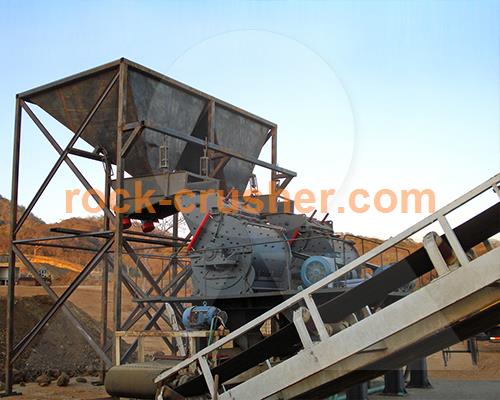
1. Hammer Design:
At the core of the hammer rock crusher lies the hammerhead. It consists of a rotating shaft fitted with multiple swinging hammers, which deliver the crushing force. These hammers come in various shapes and sizes, depending on the desired output and the hardness of the material being crushed.
2. Crushing Process:
When rocks enter the crushing chamber, they are struck by the rotating hammers. The kinetic energy of the swinging hammers transfers to the rocks, causing them to break into smaller pieces. The high-speed impact results in both compression and abrasion, breaking down the material into finer particles.
3. Grate Bars:
Within the hammer rock crusher, a set of grate bars acts as a sizing screen to control the output size of the crushed material. These bars are strategically placed across the crushing chamber and allow smaller particles to pass through while ensuring larger particles continue to be crushed until they reach the desired size.
4. Speed and Power:
Hammer mills operate at high rotational speeds, typically ranging from 500 to 2000 revolutions per minute (RPM). This high-speed rotation, combined with the weight and force of the hammers, facilitates efficient and rapid crushing. The power required to drive the hammers is generally provided by an electric motor or a diesel engine.
5. Application Flexibility:
Due to their robust construction and versatility, hammer rock crushers find applications across various industries. Whether it be in mining operations for reducing ore size, in quarries for crushing aggregates, or in construction sites for breaking down concrete and asphalt, these machines excel in processing a wide range of materials.
6. Maintenance and Safety:
Like any other industrial machinery, regular maintenance is crucial for the smooth functioning of a hammer rock crusher. This may involve inspecting and replacing worn-out hammers, checking and tightening bolts, and lubricating moving parts to reduce friction. Safety precautions, such as wearing appropriate protective gear and ensuring proper training, must also be observed when operating these machines.
The hammer rock crusher has proved to be an indispensable tool in the mining and construction industries, providing a cost-effective and efficient method for transforming solid rocks into valuable aggregates. Its simple yet effective design, high-speed hammer blows, and customizable sizing options make it a go-to choice for various applications.
As technology continues to advance, the hammer rock crusher is likely to undergo further enhancements and improvements, making it even more reliable and efficient. Its ability to process diverse materials and produce a wide range of particle sizes will ensure its relevance for years to come.