
When it comes to construction, landscaping, or mining projects, breaking down large rocks into manageable sizes is often a crucial step. This is where portable rock crushers come in handy. Unlike stationary crushers, portable rock crushers offer mobility and flexibility, allowing you to bring the crushing operation directly to the site. But how exactly does a portable rock crusher mechanism work? Let’s dive in.
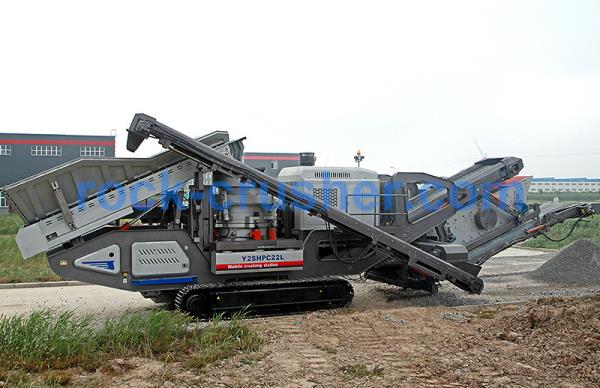
What Is a Portable Rock Crusher?
A portable rock crusher is a machine designed to reduce large rocks into smaller, more usable sizes, right at the location where the rocks are found. These crushers are mounted on wheels or tracks, making them easy to transport. They are widely used in aggregate production, mining operations, and construction sites.
Core Components of a Portable Rock CrusherUnderstanding the mechanism requires knowing the essential parts that work together:
- Feeder: This component controls the flow of raw materials into the crusher.
- Crusher Chamber: The main section where the rock is crushed.
- Crusher Mechanism: Depending on the type of crusher (jaw, cone, impact), this includes moving parts such as plates, jaws, or hammers.
- Discharge Conveyor: Transports the crushed material away from the machine.
- Power Source: This could be a diesel engine or an electric motor that drives the mechanism.
How Does the Crushing Mechanism Work?
There are several types of portable rock crushers, each utilizing a specific crushing mechanism. The most common ones include:
1. Jaw Crushers:
- Mechanism: Jaw crushers have two plates – one fixed and one movable – that form a V-shaped chamber. The movable jaw moves back and forth against the fixed jaw, crushing the rock by compressive force.
- Advantages: Great for large, hard rocks and produces a consistent product size.
2. Cone Crushers:
- Mechanism: These feature a rotating cone inside a fixed outer shell. The rock is crushed by compressive forces between the cone and the shell as the cone gyrates.
- Advantages: Suitable for medium to hard rocks with a finer output.
3. Impact Crushers:
- Mechanism: Rocks enter a chamber with spinning rotors that fling stones against impact plates, breaking them via high-speed impact forces.
- Advantages: Provides excellent reduction of softer and less abrasive materials and creates more cubical-shaped particles.
In portable setups, these crushers are designed to be compact and efficient, often combining multiple crushing functions within the device to maximize material processing.
Benefits of Portability
The portable nature of these crushers translates into:
- Reduced transport costs: Raw materials can be crushed on-site, avoiding hauling heavy rocks to a fixed crushing plant.
- Reduced setup time: Easy to move and set up, increasing operational efficiency.
- Flexibility: Suitable for remote, temporary, or multi-location projects.
The mechanism behind portable rock crushers is a fascinating blend of mechanical engineering principles tailored for mobility and efficiency. Whether you’re dealing with a tough quarry rock or construction debris, understanding the crushing mechanism helps you select the right crusher type and optimize your operation. From jaw crushers providing powerful compression to impact crushers delivering high-speed impact crushing, the portable rock crusher’s mechanism is designed to adapt to a variety of rock crushing needs on the go.