
Quarries serve as the backbone of our society, providing essential construction materials such as gravel, sand, and crushed stone. These natural resources are vital in the creation of buildings, roads, and infrastructure, making quarrying a crucial industry. In this article, we delve into the rock crushing process in quarries, demonstrating how raw materials are transformed into aggregates that are utilized in various construction projects.
Crushing: The Initial Stage
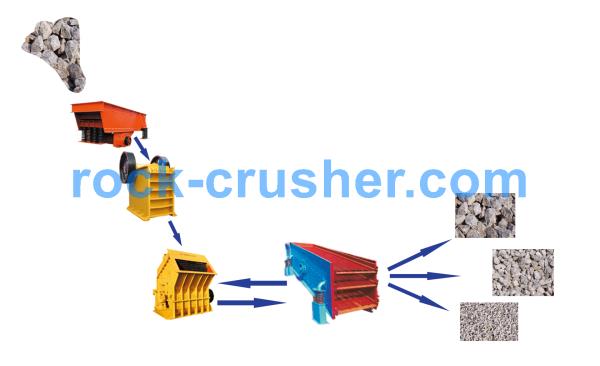
The process of acquiring raw materials in a quarry starts with the drilling and blasting of rocks. Once the desired material is extracted, it undergoes primary crushing in jaw or gyratory crushers. These crushers are designed to break larger rocks down into smaller, more manageable sizes for further processing. The fragmentation of the rock enhances efficiency in subsequent crushing stages, as smaller pieces require less energy to crush.
Screening and sorting: Managing Particle Sizes
After the initial crushing stage, the fragmented rocks are conveyed to vibrating screens that separate them into different sizes. Vibrating screens are equipped with different mesh sizes, allowing finer particles to pass through while larger ones are retained for further processing. This process ensures that the final aggregates meet specific size requirements for different construction purposes.
Secondary and Tertiary Crushing: Refining the Product
To achieve the desired aggregate sizes, secondary and tertiary crushing stages are employed. Secondary crushers, such as cone crushers or impact crushers, are used to further process the rocks. They break the larger rocks into smaller pieces that are then fed through screens to obtain specific aggregate sizes. Tertiary crushers, like vertical shaft impactors, are used to produce even finer aggregate particles and refine the shape of the final product.
Washing and Dewatering: Enhancing Quality
In some cases, certain aggregates may require washing to remove impurities and improve their overall quality. Washing involves the use of water and mechanical agitation to separate the fine particles from the coarser ones. This process helps in removing clay, silt, and other unwanted materials that could affect the final product's properties. After washing, the aggregates undergo dewatering to reduce moisture content, ensuring optimal performance during construction.
Stockpiling and Transportation: Ensuring Availability
Once the aggregates meet the required specifications, they are stockpiled for storage and future use. Stockpiling ensures a consistent supply of aggregates, as construction projects may have varying demands over time. Proper segregation and organization of different aggregate sizes make it easier for customers to select the desired products. The aggregates are then loaded onto trucks or transported via conveyor belts to construction sites, thus enabling the seamless flow of materials for ongoing projects.
The rock crushing process in quarries plays a crucial role in transforming raw materials into valuable construction aggregates. By breaking down larger rocks into smaller, refined sizes, the crushers and screens enable efficient production and delivery of aggregates that meet specific requirements. Washing and dewatering further enhance the quality of the final product, while stockpiling and transportation ensure a steady supply for construction projects.
Quarrying operations are essential for sustainable development, and the rock crushing process plays a vital role in meeting society's infrastructure needs. By embracing innovative technologies and implementing responsible quarrying practices, the industry continues to contribute to the growth and development of our communities.