
When it comes to rock crushing, the fundamentals can be dauntingly complex. Thousands of tons of rock is crushed every day, whether it be for commercial purposes or personal use. But have you ever wondered what goes on behind the scenes of a rock crushing operation? In this article, we will delve into the process flow of a rock crushing operation and shed light on the various stages involved.
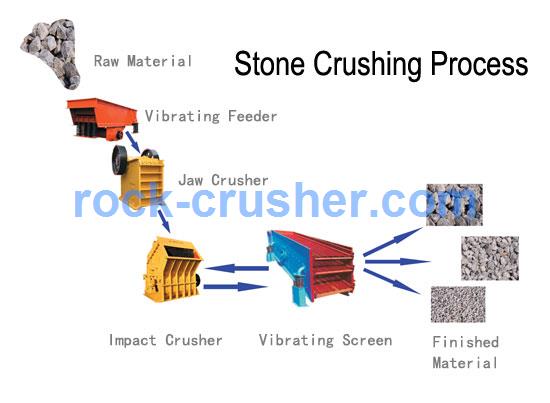
First and foremost, a rock crushing operation involves multiple stages of crushing. In order to obtain the desired size of the rocks, various machinery is used to process the rock into smaller sizes. The first stage of the crushing process is called primary crushing. Here, a large crusher, such as a jaw crusher, is used to reduce the size of the rocks to the desired size before being conveyed to the next stage.
Once the rocks have been successfully crushed to the required size, they move on to the secondary crushing stage. This is where smaller crushers, such as cone crushers or impact crushers, are used to break down the rocks further into even smaller sizes. The purpose of this stage is to achieve a specific aggregate size suitable for construction purposes or other applications.
After secondary crushing, the rocks undergo a screening process. This involves passing the crushed rocks through a series of screens with different-sized mesh openings. The screens separate the rocks into different fractions based on their sizes. This step is crucial in ensuring that the final product meets the desired specifications.
Once the rocks have been screened, they move on to the tertiary crushing stage. At this point, the rocks are further reduced in size using specialized crushers or grinding mills. This stage is crucial in achieving the final product size and shape required for specific applications.
Once the rocks have been fully crushed, they are ready to be processed into the final product. This can include products such as concrete aggregates, road base materials, or asphalt aggregates, depending on the intended use. The crushed rocks are typically transported to a storage or stockpile area, where they can be further processed or sold to customers.
In addition to the crushing and screening process, a rock crushing operation involves other important components. These include conveyors, which are used to transport the crushed rocks between different stages of the operation. They ensure a smooth flow of material and help optimize the overall efficiency of the crushing process.
Furthermore, various control systems and automation technologies are utilized to monitor and manage the rock crushing operation. These systems ensure that the crushers and screens are operating at their optimal capacity, and they can also detect any faults or issues that may arise.
All in all, a rock crushing operation is a complex and intricate process that involves multiple stages of crushing, screening, and processing of rocks. Understanding the process flow and the equipment used can help operators and stakeholders gain a better appreciation of the intricacies involved in rock crushing. Whether it is for construction purposes or other applications, rock crushing plays a vital role in various industries.