
Aggregates are fundamental materials in construction, serving as the backbone for roads, buildings, and infrastructure projects. Whether it’s the concrete in skyscrapers or the base layers of highways, aggregates provide the necessary strength and stability. But how do we get these aggregates? The answer lies in the rock crushing process—a systematic procedure that breaks down large rocks into smaller, usable pieces. In this article, we will explore the rock crushing process and how it produces different types of aggregates used in construction.
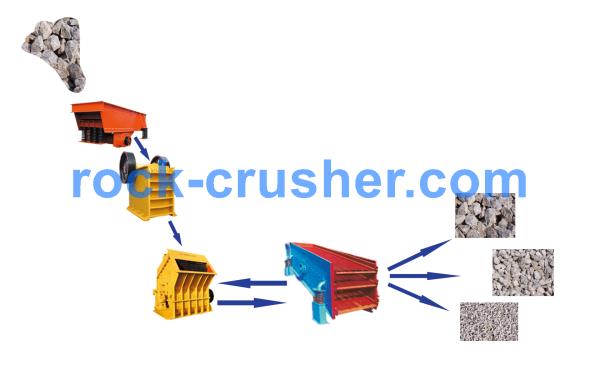
The rock crushing process is designed to reduce large rocks, mined from quarries or extracted from riverbeds, into smaller, specific sizes that can serve various construction needs. The process generally involves several stages:
1. Extraction and Transportation
The first step is extracting large stones or rock blocks from quarries or natural sources. These massive rocks are transported to the crushing site via trucks or conveyor belts.
2. Primary Crushing
The large rocks are fed into a primary crusher—usually a jaw crusher—where they are broken down into smaller chunks, usually around 6 to 10 inches in size. This stage reduces the rock to a manageable size for further processing.
3. Secondary Crushing
The smaller rocks from the primary crusher are passed through secondary crushers such as cone crushers or impact crushers. Here, the rock size is further reduced to around 1 to 3 inches. Secondary crushing increases the material’s uniformity and prepares it for fine crushing.
4. Tertiary Crushing and Screening
Sometimes, the material needs to be crushed even smaller for fine aggregates like sand or gravel. Tertiary crushers (such as vertical shaft impactors) reduce particles to the desired size. Screening machines then separate the crushed rock into different size ranges.
5. Washing and Sorting
Depending on the application, aggregates might be washed to remove dust and clay. After washing, materials are sorted and stacked based on their size and quality.
Types of Aggregates Produced
The rock crushing process produces several types of aggregates for various construction tasks:
- Coarse Aggregates: These are larger chunks, typically ranging from 10mm to 40mm, ideal for concrete and road construction where strength and durability are critical.
- Fine Aggregates: These are smaller particles, usually under 10mm (often sand-sized), used in concrete mixes, plastering, and masonry.
- Gravel: Rounded, natural aggregates used in landscaping, drainage, and foundations.
- Crushed Stone: Angular aggregates generated from crushed rock, preferred for better compaction and strength in structural projects.
Why Is Proper Crushing Important?
The crushing process impacts the quality, shape, and size distribution of aggregates, which directly influence the strength and longevity of construction materials. Uniformly sized and well-shaped aggregates improve concrete workability, compaction, and durability, while also reducing void content. Incorrect processing can lead to weak materials that fail prematurely in the field.
From massive boulders to finely crushed sand, the rock crushing process is vital in converting raw natural resources into functional building materials. Through a series of crushers and screens, rocks are meticulously broken down and sorted into various aggregates suited for different construction purposes. Understanding this process highlights the intricacies behind the everyday building materials that form the foundation of modern infrastructure.